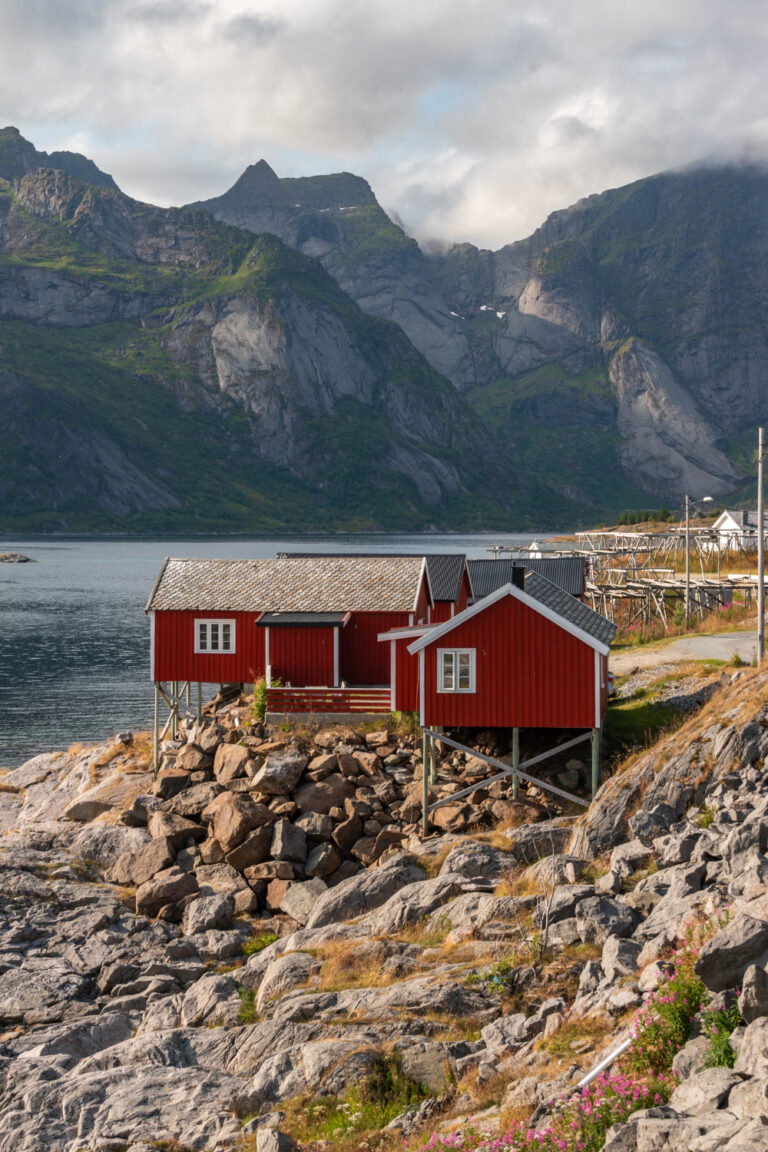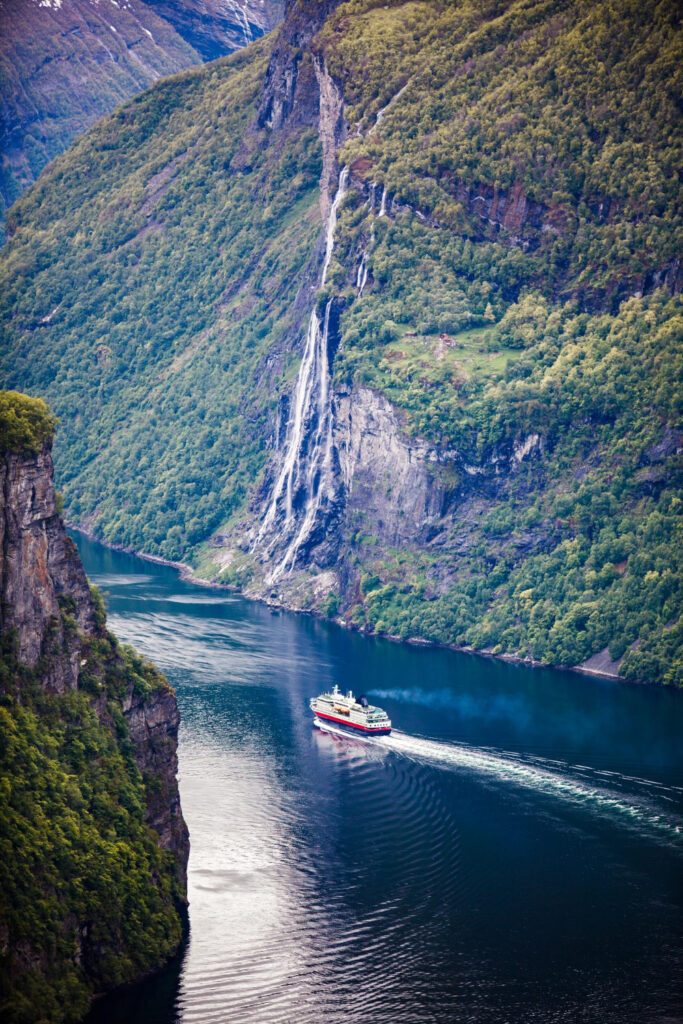
The fjords of western Norway are some of the most dramatic landscapes in Europe. Two of them, the Geirangerfjord and the Nærøyfjord, are listed together as a UNESCO World Heritage Site.
When to go
- May and June: snowmelt makes the waterfalls at their strongest and the days are very long.
- July and August: the warmest months and the busiest season, with every boat and road open.
- September: fewer visitors, autumn colours and a calmer atmosphere.
- Winter: quiet and beautiful, but some mountain roads close and boat schedules are reduced.
How to see the fjords
A fjord cruise is the classic way to experience the scale of the landscape from the water. On land, the Flåm Railway climbs from the fjord to the mountains and is one of the steepest standard-gauge railways in the world. Scenic roads, viewpoints and short hikes complete the picture.
Combine the fjords with Oslo and Bergen
Many visitors travel from Oslo to the fjords by train, crossing the Hardangervidda mountain plateau, and continue to Bergen, the gateway to the fjord region. It is an easy way to combine the capital, the mountains and the coast in a few days.
Practical tips
- Pack layers and a rain jacket. The weather changes quickly, even in summer.
- Book trains and boats in advance for July and August.
- Allow extra time between connections. The views will slow you down.
Plan your fjord journey
We combine fjord cruises, scenic railways and the Norwegian capital in private journeys and group programmes. Explore Norway.